
Ohio USDA Loan Guide

USDA loans can be one of the strongest affordability paths for Ohio buyers because they offer 0% down on eligible primary residences in qualifying areas. The challenge is not finding generic USDA talking points. It is figuring out whether the address, household income, property type, and cash-to-close plan really work for your file.
If you have been searching for ohio usda mortgage, usda lenders ohio, usda mortgage ohio, usda loans in ohio, usda loan requirements ohio, or usda home loans ohio, this guide is built to answer those questions in one place with current USDA, OHFA, and Western Ohio Mortgage context.
Western Ohio Mortgage is listed in Ohio Home’s lender search, and the company’s live About page says WOM has Direct Endorsement HUD approval, Rural Development approval, and VA approval. That matters because the best USDA page should do more than explain the rules. It should help you turn those rules into a realistic preapproval plan.
Start Here
USDA says eligible buyers may purchase a primary residence in an eligible rural area with 100% financing.
USDA says household income cannot exceed 115% of median household income for the property area.
USDA guaranteed loans are offered as 30-year fixed-rate loans through approved lenders.
Quick answer: The USDA Section 502 Guaranteed Loan Program can be a strong option for Ohio buyers who want no-down-payment financing on a primary residence in a qualifying area. USDA says the home must be in an eligible rural area, household income cannot exceed 115% of median household income, and the property must be your primary residence. USDA also says the loan is offered as a 30-year fixed-rate mortgage and that reasonable and customary closing costs may be included with loan funds when the transaction supports it.
Important: USDA itself says the program has no minimum credit score requirement, but lenders or investors may apply overlays. If you are using an OHFA-backed USDA structure, OHFA currently says USDA loans require 640 or higher.
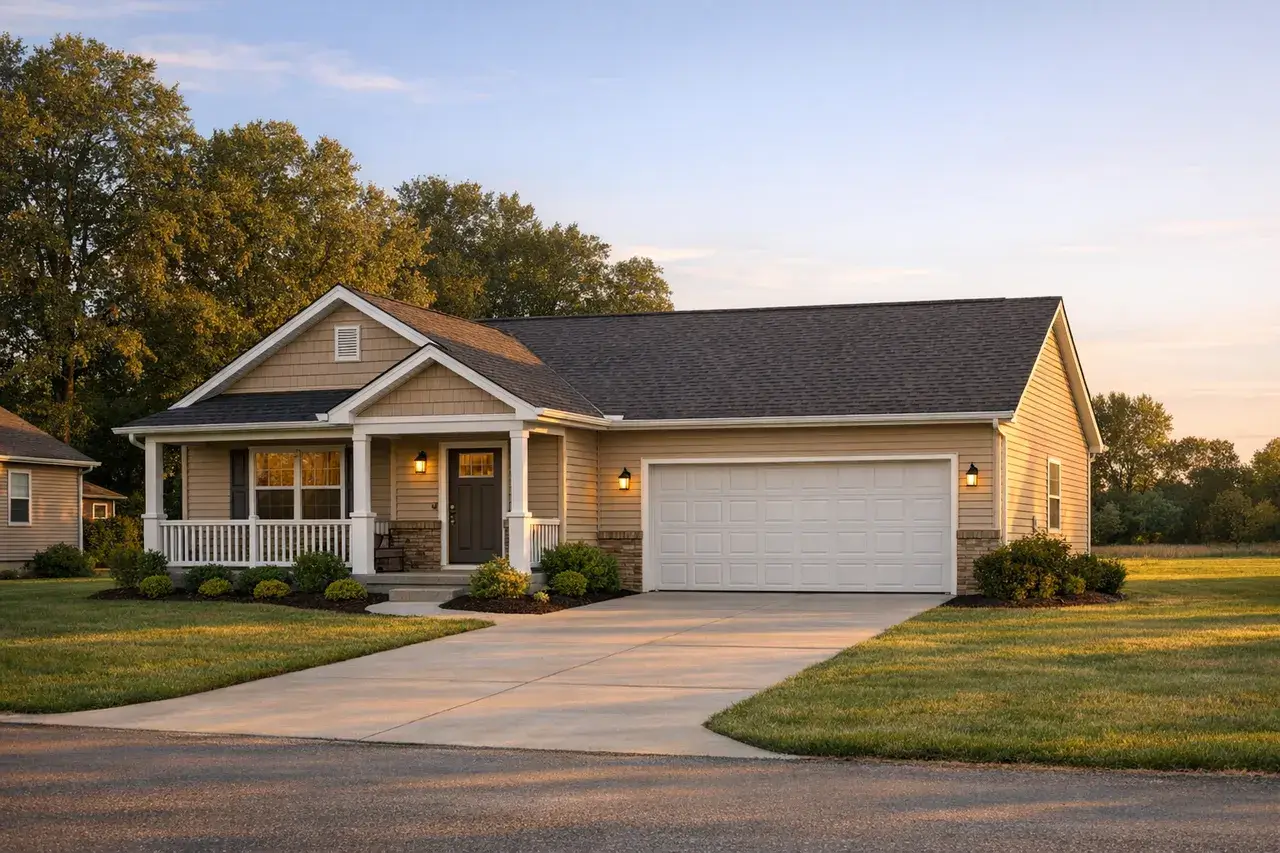
That is why this page focuses on address eligibility, income, property condition, and cash to close instead of turning USDA into a vague “rural lifestyle” story. In Ohio, USDA often works best at the edge of town, in smaller communities, and in outer-ring residential areas where the address still qualifies.
Benefits
For eligible buyers, USDA removes the down payment requirement on the purchase itself, which is why it stays central to Ohio affordability searches.
Current USDA handbook guidance says seller contributions are limited to 6% of the sales price for eligible purposes, which can help reduce cash needed at closing.
USDA guidance says reasonable and customary closing costs may be financed with loan funds when the transaction supports it.
USDA is often associated with first-time buyers, but the program itself is not limited to them.
Address eligibility is broader than buyers expect, especially outside the densest parts of a metro area.
OHFA says its Homebuyer Program includes USDA-RD loans, and qualified government-loan borrowers may use 3.5% assistance toward closing needs.
| Advantage | Official USDA meaning | Why it matters in Ohio |
|---|---|---|
| 100% financing | USDA says eligible rural homebuyers may purchase with no money down. | Buyers who are payment-ready but cash-tight often look here before FHA or conventional. |
| 30-year fixed only | USDA says guaranteed loans are 30-year fixed-rate loans. | It makes apples-to-apples payment comparisons easier when you review USDA against FHA, VA, and conventional. |
| Primary-residence focus | USDA says the borrower must personally occupy the dwelling as a primary residence. | This keeps the page focused on real homebuyers, not investor scenarios. |
| Address-driven eligibility | USDA says eligible rural areas should be checked through the official eligibility site. | That is more accurate than assuming an entire Ohio county is either fully in or fully out. |
Eligibility
| Requirement | Official USDA rule | Ohio / lender note |
|---|---|---|
| Income | Household income cannot exceed 115% of median household income. | Use the official USDA tool because the limit changes by county and household size. |
| Occupancy | The home must be your primary residence. | USDA is not for second homes or investment property purchases. |
| Location | The property must be in an eligible rural area. | Many edge-of-town Ohio addresses still qualify, but the exact address controls the answer. |
| Credit | USDA says the program has no credit score requirement. | Lenders or investors may require one. OHFA-backed USDA currently points to 640 or higher. |
| Loan term | Guaranteed loans are 30-year fixed-rate loans. | That fixed-rate structure is one reason USDA remains strong for budget-driven Ohio buyers. |
| Property condition | The home must be adequate, modest, decent, safe, and sanitary. | Move-in-ready homes are usually the cleanest USDA fit. Repair-heavy properties need a closer review. |
OHFA’s Homebuyer Program says it offers 30-year fixed-rate USDA-RD mortgages through approved lenders, and OHFA’s Down Payment Assistance page says government loans, including USDA, can use 3.5% assistance toward down payment, closing costs, or other pre-closing expenses. That means a buyer comparing USDA in Ohio should not stop at USDA-only rules. They should also ask whether an OHFA structure changes the cash-to-close picture.
Ohio Areas
USDA eligibility in Ohio often opens up faster than buyers expect once they move beyond the densest urban core. Buyers looking in or around Shelby, Miami, Auglaize, Logan, Clark, and Allen counties often find addresses worth checking early in the process.
Some counties contain both eligible and ineligible pockets. That is why USDA says you should use the official eligibility site to test the exact property address instead of relying on a stale county-by-county table.
Use the official USDA eligibility site before you commit emotionally to the house.
USDA counts household income differently than many buyers expect, so verify it before you write the offer.
Confirm that the home type, condition, and final contract structure still support USDA.
The right address check takes less time than restructuring an offer later because the property does not fit USDA.
Closing Costs
| Cost topic | Current guidance | Borrower takeaway |
|---|---|---|
| Seller contributions | USDA handbook guidance says seller contributions are limited to 6% of the sales price for eligible purposes. | This can be one of the cleanest ways to reduce closing-table cash when the market and contract allow it. |
| Financed closing costs | USDA says reasonable and customary closing costs may be financed with loan funds. | Useful when the appraisal and transaction structure support it, but never assume it before the numbers are reviewed. |
| OHFA assistance | OHFA says government loans including USDA may use 3.5% assistance toward pre-closing expenses. | That can help bridge the gap between “zero down” and “low cash to close.” |
| Prepaids and escrows | Taxes, insurance, and escrow setup may still apply. | The smartest USDA strategy starts with the real closing-day number, not the headline alone. |
For a fuller Ohio-specific discussion, see How Much Are Closing Costs in Ohio?.
Loan Comparison
| Loan type | Often fits | Typical minimum down payment | Main watchout |
|---|---|---|---|
| USDA | Buyers with eligible income buying in qualifying areas | 0% | Property geography and household income rules |
| FHA | Buyers who want more flexible underwriting | Often 3.5% | Mortgage insurance and higher upfront cash than USDA |
| Conventional | Buyers with stronger credit or low-down-payment conventional eligibility | Sometimes as low as 3% | Can be less forgiving on some credit and debt profiles |
| VA | Eligible veterans and service members | 0% | Military eligibility rules apply |
The right question is not just “Can I use USDA?” It is “Should I use USDA instead of FHA, conventional, or VA once my address, budget, and closing costs are on the table?” Western Ohio Mortgage can help you compare FHA loans, conventional loans, and USDA loans side by side before you commit.
Next Steps
Start with the exact address, not a general county assumption.
Household income rules can differ from what buyers expect from other mortgage types.
USDA itself has no score minimum, but lender rules still matter.
The best affordability answer is not always the no-down-payment headline.
Know the real monthly payment and cash to close before you write offers.
Seller concessions, appraisal-supported financed costs, and OHFA assistance can change the whole closing picture.
Why Work With WOM

Ohio buyers do not need another giant county table or another vague promise about “rural living.” They need a lender who can help them test the address, review household income, compare USDA against FHA and conventional, and structure the cash-to-close strategy before they shop too far ahead of themselves.
Western Ohio Mortgage is listed in Ohio Home’s lender search and operates from a main office in Sidney, Ohio.
The live About page says WOM has Direct Endorsement HUD approval, Rural Development approval, and VA approval.
A live WOM blog page says the company has been serving customers since 1999, which reinforces the long-standing local brand story.
FAQ
USDA says the program has no minimum credit score requirement, but lenders or investors may apply overlays. If you are using an OHFA-backed USDA structure, OHFA currently says conventional, USDA, and VA loans require 640 or higher.
No. USDA says the guaranteed loan program helps eligible low- and moderate-income households purchase, build, rehabilitate, improve, or relocate a dwelling as their primary residence in an eligible rural area. It is not limited to first-time buyers.
Yes. USDA handbook guidance says reasonable and customary closing costs may be financed with loan funds when the transaction supports it. Appraisal support, final underwriting, and the exact structure still matter.
Sometimes, yes. Many edge-of-town and outer-ring locations still qualify even when buyers would not think of them as rural in everyday language. USDA says you should use the official eligibility site to test the exact address.
USDA says household income cannot exceed 115% of median household income for the property area. The right limit depends on location and household size, so use the official eligibility site rather than relying on a stale county table.
Yes, when the borrower and file fit the program rules. OHFA says its Homebuyer Program includes USDA-RD loans and its Down Payment Assistance page says government loans, including USDA, can use 3.5% assistance toward down payment, closing costs, or other pre-closing expenses through approved lenders.
Contact
Start the application if you want a real qualification review and a lender-driven action plan.
If you want fast answers about USDA eligibility, no-down-payment options, or cash to close, talk to the team directly.
If you are not ready to apply yet, use the contact form or connect with Adam J Rose for a more consultative next step.
733 Fair Rd.
Sidney, OH 45365
Adam J Rose
Vice President / Senior Loan Officer
NMLS #870301
Estimate your payment before or after you start preapproval.
Sources